
Jordan 1 Shoes Colorways That Transformed the Sneaker World Forever
The Air Jordan 1 is more than a court shoe — it is the backdrop upon which modern sneaker culture was created. Since Peter Moore’s first creation launched in 1985, the Jordan 1 shoe has been produced in well over 700 recorded colorways, and yet only a select few have earned the kind of cultural weight that transforms the industry at large. These colorways are the ones that sparked chaos at launch events, drove millions in secondary-market value, inspired clothing creators, and turned into emblems of personal identity for whole generations. Each colorway listed here didn’t just push units — it pushed boundaries on what footwear could symbolize in broader culture. In 2026, the Air Jordan 1 is still the most iconic shoe silhouette on the planet, and the colorways below show clearly why that grip has persisted for over four decades. This is the complete look at the Jordan 1 colorways that changed everything.
Chicago (1985): Where It All Began
You cannot discuss sneaker culture without mentioning the Air Jordan 1 “Chicago” — the white, black, and varsity red colorway that Michael Jordan sported during his rookie season with the Bulls in 1985. This was the shoe that Nike wagered its entire basketball future on, committing a groundbreaking $2.5 million endorsement contract in a rookie who had yet to play a single pro game. The color blocking was consciously attention-grabbing, crafted to match the Chicago Bulls’ home jersey and be visible on TV screens that were still largely experienced on compact screens. In its first year, the Chicago colorway drove $126 million in income, a figure that outpaced Nike’s most ambitious internal projections by a factor of forty. In 2026, an OG 1985 pair in deadstock condition can demand prices between $15,000 and $40,000 based on size and provenance, making it one of the most prized consumer-grade products in history. Every retro drop of the Chicago — in 1994, 2013, 2015, and the “Lost and Found” edition in 2022 — has been snapped up within minutes, demonstrating that go here this colorway’s cultural pull has not lessened one bit across four decades.
Bred / Banned (1985): Turning a Ban into a Brand
Known widely as “Bred” or “Banned,” the black and red Air Jordan 1 claims a singular place as the sneaker that turned a uniform violation into the most effective promotional narrative in footwear history. The NBA fined Michael Jordan $5,000 per game for rocking sneakers that violated the league’s required 51% white rule, and Nike happily paid every fine while crafting ads that played up the controversy. The “Banned” narrative transformed a simple pair of kicks into a emblem of individuality, self-expression, and the concept that rules exist to be challenged by the genuinely outstanding. This storyline connected strongly with young consumers in the mid-1980s and has been retold so many times that it’s now part of American collective memory. The Bred colorway has been retroed more than any other Jordan 1, with major releases in 2001, 2009, 2013, 2016, and 2025, each creating instant sell-outs. Resale data from StockX reveals that the Bred Jordan 1 always appears in the top five most-traded kicks on the site year after year, demonstrating a interest that simply does not fade.
Royal Blue (1985): Hip-Hop’s Signature Pick
While the Chicago and Bred grab the spotlight, the Royal Blue Air Jordan 1 without fanfare turned into the go-to shoe for New York City’s growing hip-hop movement in the late 1980s. The striking black and royal blue pairing paired well with the Kangol hats, gold chains, and denim that represented pioneering hip-hop culture, and the kick appeared in numerous clips, album art, and concert stages throughout the era. Rappers from Run-DMC’s camp to later generations of New York rappers adopted the Royal as a wardrobe staple, embedding it into the visual language of hip-hop for decades. The 2017 retro release produced over $30 million in resale transactions alone, and the 2024 “Royal Reimagined” edition featured premium materials that appealed to both OG collectors and a younger generation of consumers. What makes the Royal important beyond appearance is its part in uniting basketball culture and music culture — it established that a sneaker could be claimed equally to an athlete and an musician. The Royal’s persistent demand in 2026 demonstrates that colorways born from organic grassroots culture have a staying power that ad spend alone are unable to create.
Shadow (1985): The Low-Key Grail
The Air Jordan 1 “Shadow” in black and medium grey proved that restraint can be just as powerful as loud color schemes — a game-changing colorway doesn’t have to be loud. Dropped as part of the first 1985 collection, the Shadow was initially regarded as a secondary offering alongside the Chicago and Bred, but it has evolved into one of the most sought-after and flexible colorways in the entire Jordan collection. The muted color scheme makes it one of the few Jordan 1s that can be worn with virtually any ensemble, from suits to streetwear, which gives it a practical everyday versatility that louder colorways may not offer. Style icons and wardrobe consultants consistently cite the Shadow as the “ultimate first Jordan 1” because of its ability to complement rather than overpower the rest of an look. The 2018 retro reissue was snapped up instantly and hit $280 on the aftermarket, while the 2023 “Shadow 2.0” introduced a reverse color blocking that polarized fans but still sold out within hours. The Shadow’s journey from slept-on debut to coveted collectible perfectly illustrates how sneaker culture’s sensibilities develops over time, often lifting the quiet over the bold.
| Colorway | Original Release | Major Retro Years | Estimated Resale (DS, 2026) | Historical Significance |
|---|---|---|---|---|
| Chicago | 1985 | 1994, 2013, 2015, 2022 | $300–$40,000+ | Origin of sneaker culture |
| Bred / Banned | 1985 | 2001, 2013, 2016, 2025 | $250–$15,000+ | Rebellion and marketing legend |
| Royal Blue | 1985 | 2001, 2017, 2024 | $200–$8,000+ | Hip-hop crossover |
| Shadow | 1985 | 2009, 2018, 2023 | $180–$5,000+ | Subtle versatility |
| Travis Scott Reverse Mocha | 2022 | — | $1,200–$2,500 | Star-powered collabs |
| Off-White “The Ten” Chicago | 2017 | — | $4,000–$12,000 | Fashion-art crossover |
| UNC (University Blue) | 1985 | 2015, 2021 | $200–$6,000+ | MJ’s UNC heritage |
Collaborative Releases: Travis Scott and Off-White Redefine the Game
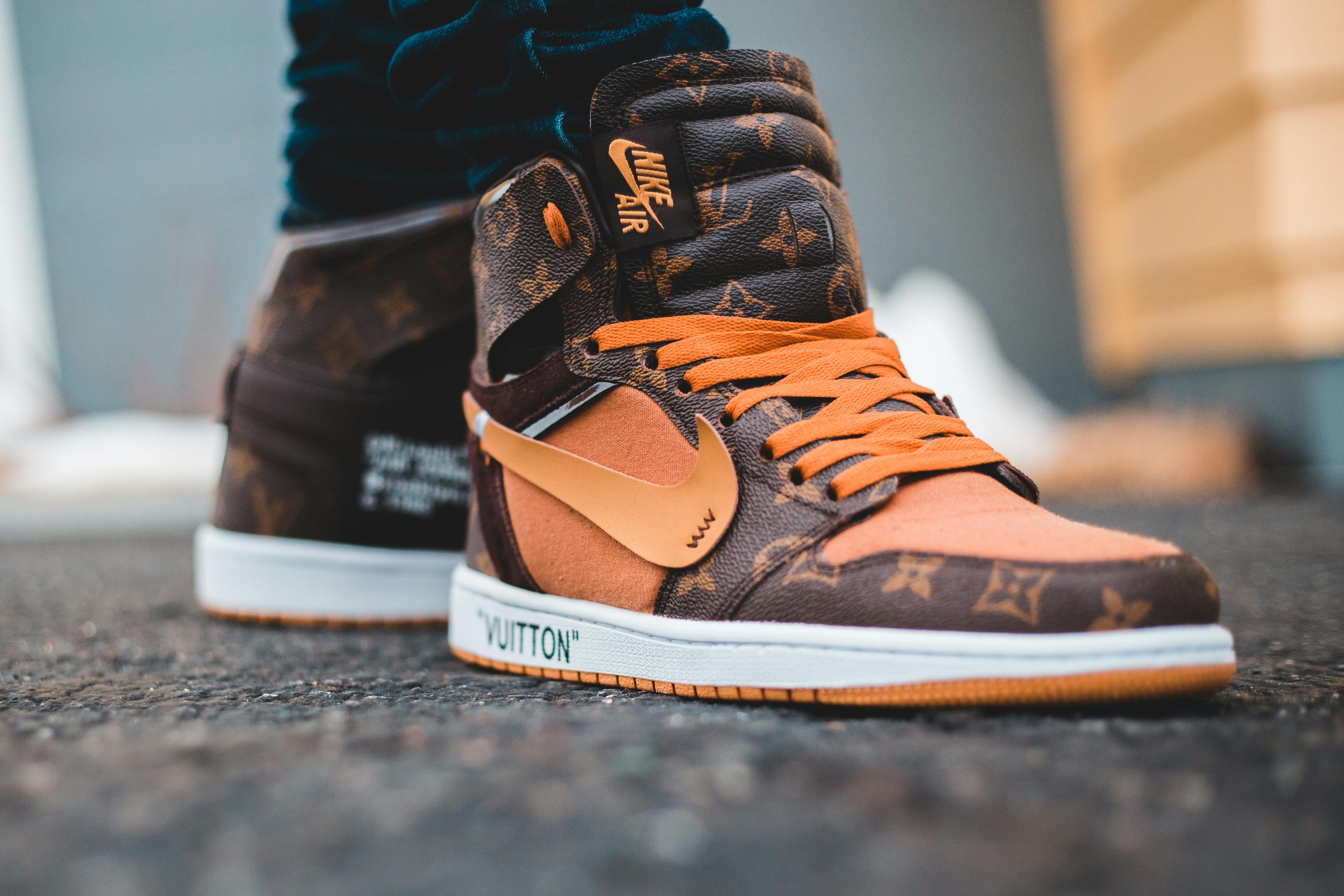
Starting in 2017, partnership-based colorways on the Jordan 1 completely transformed how the footwear industry views product launches and cultural relevance. Virgil Abloh’s Off-White x Air Jordan 1 “Chicago,” part of “The Ten” collection, pulled apart the classic design with visible foam, displaced swooshes, and factory zip-tie tags unlike anything seen before. That shoe — selling for $190 and now reselling for $4,000 to $12,000 — validated kicks as design objects and fashion pieces simultaneously. Travis Scott’s alliance, especially the 2019 high-top and the 2022 “Reverse Mocha” low, debuted the reversed swoosh that triggered endless knockoffs across the shoe industry. These collabs created a fresh echelon: the “hype collab” release, where the designer’s name carries comparable power to Jordan Brand itself. In 2026, collaborative Jordan 1 drops sell out in under 90 seconds on the SNKRS app and produce more engagement than many prominent luxury label launches.
University Blue and the Emotional Weight of Heritage Colorways
Because it pays tribute to Michael Jordan’s alma mater, the University of North Carolina at Chapel Hill — where he nailed the game-winning shot in the 1982 NCAA Championship as a freshman — the Air Jordan 1 “UNC” or “University Blue” colorway carries profoundly emotional significance. That moment ignited Jordan’s career, and the light blue and white color scheme forever linked this colorway to basketball’s greatest origin story. Every UNC release draws from that deep well of emotion, linking fans to a narrative of fate and clutch moments. The 2015 retro was one of the most awaited drops of the decade, and the 2021 “Hyper Royal” variation broadened the palette with a tie-dye finish demonstrating classic colorways could develop without giving up sentimental heart. Sneaker culture is built on compelling narratives, and no colorway carries a more captivating story than the one rooted in Jordan’s storied origin. The UNC’s enduring appeal in 2026 confirms that real stories always beats artificial buzz.
Why Colorways Are Significant More Than Ever in 2026
The Air Jordan 1’s lasting grip ultimately comes down to one fact: the design is a blank canvas, and colorways are the paint that gives it meaning. In an era where Nike releases hundreds of Jordan 1 iterations every year, the colorways that endure contain stories — the defiant birth of the Bred, the cultural authenticity of the Royal, the creative vision of Off-White. Social networks like Instagram and TikTok boost each drop into a massive moment driving millions of impressions within hours. The resale market, estimated at over $10 billion across the globe, acts as a stock market for colorways, with prices shifting based on cultural mood and limited availability. For the younger consumers entering Jordan Brand in 2026, these colorways serve as entry points into a layered heritage encompassing athletics, music, style, and self-expression. The Jordan 1 established that the right shades on the right silhouette become a enduring piece of cultural history.